viernes, 29 de mayo de 2015

CONCLUSION

In conclusion, grit is very important for us, because it help us to think better and to achieve our golas, with grit you can be a better person and show yourself that you can do anythig that you want and anything thaat you love.


jueves, 28 de mayo de 2015

SCIENTIFIC FINDINGS

The primary scientific findings on grit come from Duckworth and colleagues’ examination of grit as an individual difference trait capable of predicting long-term success. It was proposed that individuals who possess a drive to tirelessly work through challenges, failures, and adversity to achieve set goals and are uniquely positioned to reach higher achievements than others who lack similar stamina. In a series of six studies Duckworth et al. proposed, developed, and tested a two-factor grit scale with notable results. 


miércoles, 27 de mayo de 2015

GRIT AND PERSONALITY MEASURES

The grit measure has been compared to the Big Five personality model, which are a group of broad personality dimensions consisting of openness to experience,conscientiousnessextraversionagreeableness, and neuroticism. In one study by Duckworth and Quinn, the Short Grit Scale (Grit–S) and 12-item self-report measure of grit (Grit–O) measuring grit was strongly correlated with conscientiousness (r = .77, p <.001 and r = .73, p <.001) (2009). While grit is related to conscientiousness measures, it also differs from conscientiousness in important ways. For example, while both grit and conscientiousness are often associated with short term accomplishments, grit is also associated with longer term and multi-year goals. This long-term persistence and dependability are important aspects that make grit distinct from conscientiousness. Another personality characteristic that is often linked to grit is the need for achievement.


martes, 26 de mayo de 2015


GRIT AND INTELLIGENCE

One of the best predictors of future achievement has been intelligence. This relationship has been found in scholastic achievement as well as in job performance. As such, one might expect that grit would be strongly correlated with intelligence. In fact, this prompted one of the early questions asked in grit research, “Why do some individuals accomplish more than others of equal intelligence?”. Somewhat surprisingly, in four separate samples, grit was found to be either orthogonal to or slightly inversely correlated with intelligence. This means that grit, unlike many traditional measures of performance is not tied to intelligence. As the researchers have suggested, this helps explain why some very intelligent individuals do not consistently perform well over long periods


lunes, 25 de mayo de 2015

GRIT

Grit in psychology is a positive, non-cognitive trait based on an individual's passion for a particular long-term goal or endstate, coupled with a powerful motivation to achieve their respective objective. This perseverance of effort promotes the overcoming of obstacles or challenges that lie within a gritty individual’s path to accomplishment, and serves as a driving force in achievement realization. Commonly associated concepts within the field of psychology include "perseverance", "hardiness", "resilience", "ambition", "need for achievement" and "conscientiousness". 


viernes, 22 de mayo de 2015

CONCLUSION

So in conclusion the zest is a very important character strength because is important in our life for having a order life and doing all the things we want to do, because it help you to be an enthusiastic person and to have better relationship with your family, friends, etc.


jueves, 21 de mayo de 2015


APPLICATION OF ZEST

There are a few working ways to help individuals cultivate zest:
One method to cultivate zest is acting "as if,' which involves living a "faith-based" rather than an "evidenced-based" life. This means believing in things that there may not be much evidence for or proof of. Additionally, adopting strong body language may help, as well as "faking it until you make it" meaning acting as though one has an increased enthusiasm for life (more zest) until that increased enthusiasm is a reality (thus, an increase in zest is a reality) .

miércoles, 20 de mayo de 2015

SATISFACTION OF ZEST

Zest has been found to be linked to higher levels of life satisfaction among adults as well as youths. Studies suggest that certain character strengths, including zest as well as curiosity, gratitude, hope, and humor are highly correlated with life satisfaction, whereas others strengths demonstrate low correlations with life satisfaction (appreciation of beauty and excellence, creativity, kindness, love of learning and perspective). It is suggested that zest is associated with higher life satisfaction because it is associated with living in the "here and now," which is also is associated with life satisfaction. Furthermore, it is difficult to imagine zestful people who are often unhappy.

martes, 19 de mayo de 2015

POSITIVE YOUTH DEVELOPMENT

Zest can be applied in every aspect of life to bring out a positive change in each individual’s life. It also has effects in groups, communities, departments and offices. People are taught to take life’s hurdles and obstacles as challenges and face them with bravery and an open mind. Zest, along with gratitude, hope, curiosity and love, are important aspects of positive psychology and key to positive character development. The adequate promotion of these characteristics not only in domestic life but also in schools and other educational environments is extremely important to positive youth development. 

lunes, 18 de mayo de 2015


ZEST

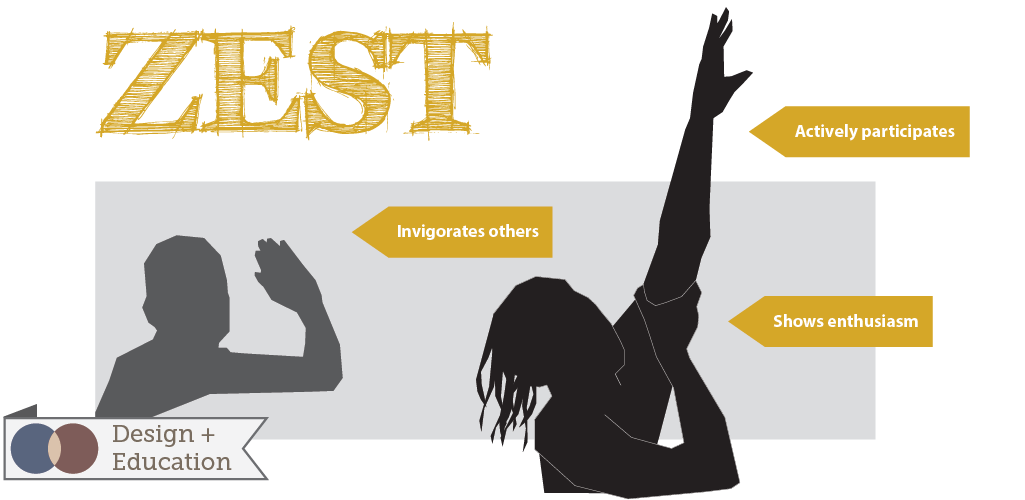
In positive psychologyzest is one of the 24 strengths possessed by humanity. As a component of the virtue of courage, zest is defined as living life with a sense of excitement, anticipation, and energy. Approaching life as an adventure; such that one has “motivation in challenging situations or tasks”. Zest is essentially a concept of courage, and involves acquiring the motivation to complete challenging situations and tasks. Those who have zest exude enthusiasm, excitement and energy while approaching tasks in life.


viernes, 15 de mayo de 2015

CONCLUSION

So in conclusion the Social Intelligence is very important now, we need it to get to our golas like a society, i think that if we had more social intelligence we would be a very good world without all the wars that we had.

jueves, 14 de mayo de 2015

NOW A LITTLE TEST ABOUT SOCIAL INTELLIGENCE  FOR YOU


http://socialintelligence.labinthewild.org/mite/

miércoles, 13 de mayo de 2015

Why is social intelligence important?

By helping to improve people’s social relationships, social and emotional learning programs have been shown to enable participants to demonstrate greater enjoyment and stronger performance in school and less risky behavior (including reduced drug use and violence).

martes, 12 de mayo de 2015

A LITTLE VIEW TO SOCIAL INTELLIGENCE

Defining social intelligence seems easy enough, especially by analogy to abstract intelligence. When it came to measuring social intelligence, however, E.L. Thorndike noted somewhat ruefully that "convenient tests of social intelligence are hard to devise. Social intelligence shows itself abundantly in the nursery, on the playground, in barracks and factories and salesroom, but it eludes the formal standardized conditions of the testing laboratory. It requires human beings to respond to, time to adapt its responses, and face, voice, gesture, and mien as tools".


lunes, 11 de mayo de 2015

 LIFE BLOGS


SOCIAL INTELLIGENCE

Social intelligence is the capacity to effectively negotiate complex social relationships and environments. Psychologist Nicholas Humprhey believes that it is social intelligence, rather than quantitative intelligence, that defines humans. Social scientist Ross Honeywill believes social intelligence is an aggregated measure of self- and social-awareness, evolved social beliefs and attitudes, and a capacity and appetite to manage complex social change.